
Crowns and Bridges in Richardson, TX
If a tooth is cracked, worn down, or missing, a crown or bridge can put your bite back together without drama. Dr. Korenman will explain what you actually need, what it costs, and what can wait, before any work begins.
An Honest Look at Crowns and Bridges
Most people who come in asking about Crowns and Bridges in Richardson TX are dealing with one of three things: a tooth that broke off a piece, a tooth that has had a root canal and feels fragile, or a gap from a tooth that was lost years ago. You may have been told by another office that you need several at once. You may have been told nothing at all and just want a straight answer.
We start with a careful look and a conversation. Dr. Korenman has practiced for more than 30 years, and he has seen what happens when crowns get recommended too quickly and what happens when broken teeth get ignored too long. Neither one is good. The goal here is to tell you which tooth genuinely needs a crown, which one could be repaired with a filling, and whether a bridge is the right way to close a gap or whether an implant would serve you better in the long run.
You will get fees in writing before treatment starts. If something is outside our scope, we will say so and point you to the right specialist. That is how this office has worked since 2006, and it is part of why we were the only dental practice to win the North Texas Business Ethics Award from the Dallas Business Journal.
What a Crown Does and What a Bridge Does
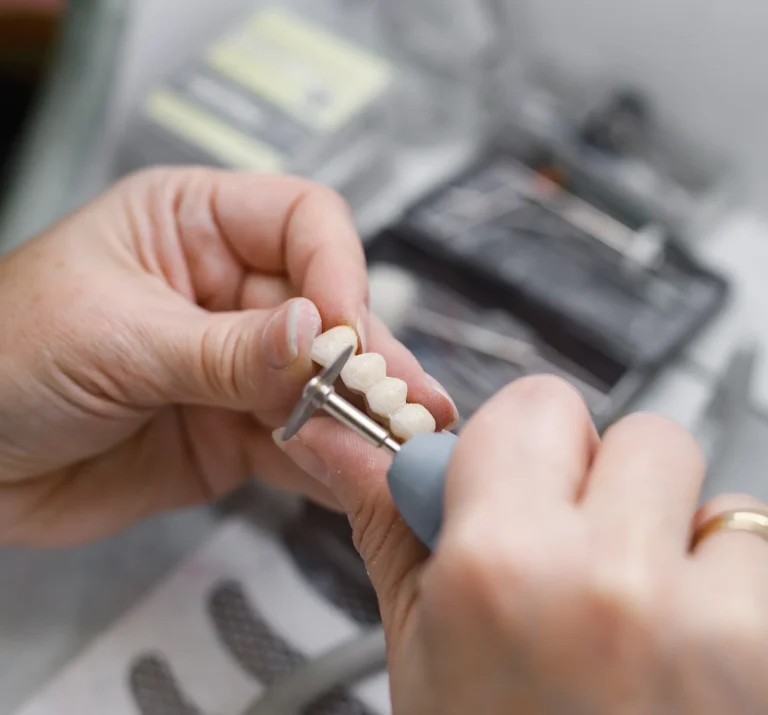
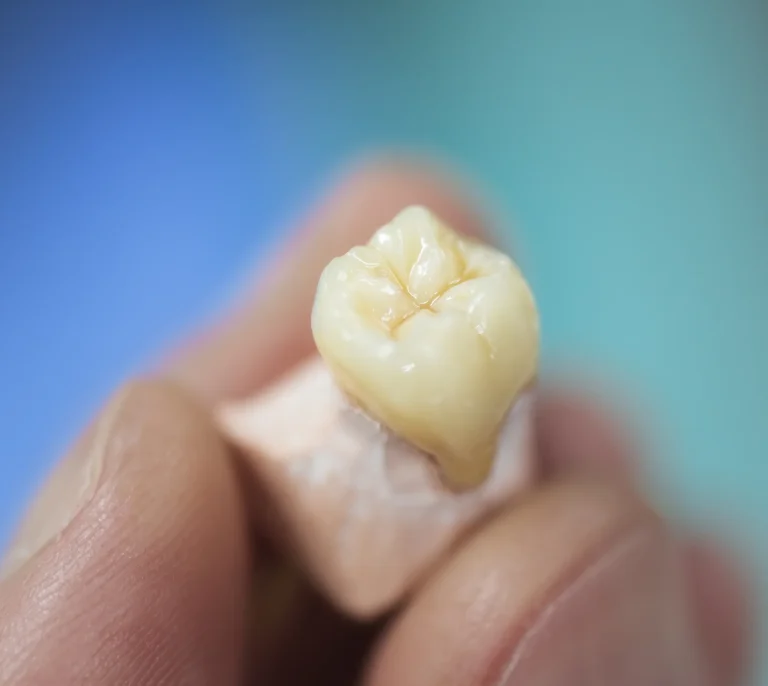
A dental crown is a custom cap that covers a tooth from the gumline up. It is used when a tooth has lost too much structure for a filling to hold, when a tooth has cracked, or when a tooth has had a root canal and needs protection from chewing forces. Modern crowns are usually made of porcelain or zirconia, shaped and shaded to match the teeth next to them. Done well, no one should be able to tell which tooth is the crown.
A dental bridge replaces one or two missing teeth in a row by anchoring to the teeth on either side of the gap. The two outer teeth get crowns, and a false tooth (or two) is fused between them. It is fixed in place, so you do not take it out at night. A bridge is a reasonable option when the neighboring teeth already need crowns anyway, or when an implant is not possible for medical or bone reasons.
When the neighboring teeth are healthy and untouched, an implant is often the more conservative long-term choice, because it avoids reshaping good teeth. We will walk through both paths with you, with the trade-offs in plain language, and let you decide. If you want to read more about tooth replacement, our pages on single tooth replacement in richardson tx and dental implants in richardson tx cover that side in detail.
When a Crown or Bridge Is the Right Call
A crown is usually the right answer when more than about half of the tooth structure is gone, when a large old filling has fractured around the edges, when a tooth has visible cracks running down the side, or after a root canal on a back tooth. It is also used when a front tooth has been worn flat or chipped repeatedly and a small repair will not hold. If a tooth can be saved with a filling instead, we will tell you that and do the filling.
A bridge is most often the right call when one or two adjacent teeth are missing, the neighboring teeth already need crowns or have large fillings, and either implant surgery is not an option or you would prefer not to go that route. Bridges work well for people who want their gap closed in a few weeks rather than the several months an implant takes from start to finish.
A few situations push us away from a bridge: heavy clenching or grinding without a nightguard, gum disease that has not been treated, or a gap with healthy neighbors where an implant would be the cleaner solution. We screen for all of that during the exam, including a 3D scan with our in-house NewTom VG3 cone-beam CT when bone or root anatomy matters. If clenching is part of your picture, we may also talk about nightguards in richardson tx before placing new restorations on top of an unprotected bite.
What Getting a Crown or Bridge Here Actually Looks Like
The first visit is an exam, X-rays as needed, and a conversation. Dr. Korenman will look at the tooth, the bite, and the teeth around it, and explain what he sees. You will get a written estimate before anything is scheduled. No surprise add-ons later.
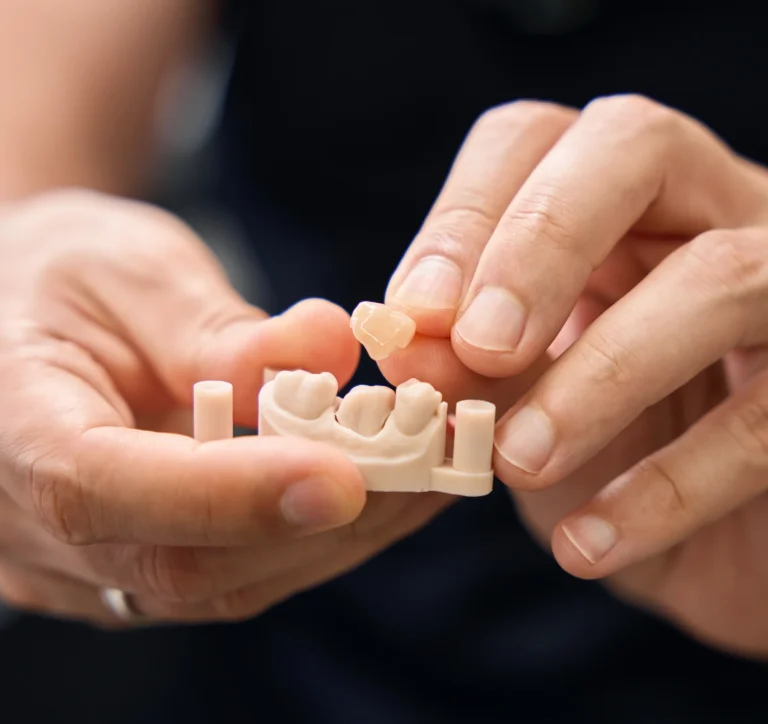
At the prep appointment, the tooth is numbed, the damaged structure is removed, and the tooth is shaped to receive the crown. We take a digital scan or impression of the prepared tooth and the surrounding bite, and a temporary crown goes on while the lab makes the permanent one. For a bridge, the same is done on both anchor teeth, with a temporary bridge in between. Most people return to normal eating that evening, with mild soreness for a day or two.
Two to three weeks later, the permanent crown or bridge is cemented in place. We check the fit, the color match, and the bite carefully, and adjust until it feels right. Then Dr. Korenman calls you that evening to see how you are doing, and he gives you a direct number in case anything feels off in the days after. Some people call that old-fashioned. We call it the way dentistry should work.
How PPO Insurance Usually Handles Crowns and Bridges
Crowns and bridges are major restorative services under most PPO dental plans, which typically means they are covered at around 50 percent after your deductible, up to your annual maximum. Coverage varies by plan and by whether the tooth meets your insurer’s criteria for medical necessity. We will verify your benefits before treatment and give you a written estimate of what your plan is expected to pay and what your out-of-pocket portion will be.
Loveable Smiles works with most PPO insurance plans and files claims for you. If a crown is being recommended for a cosmetic reason rather than a structural one, we will tell you that up front, because cosmetic crowns are usually not covered. For larger treatment plans that combine crowns, a bridge, or other restorative work, we can talk through payment options so the timing works for your budget. You can read more on our dental insurance in richardson tx page.
How Long Crowns and Bridges Last and Why That Matters
A well-made crown, placed on a healthy tooth and cared for with regular cleanings, often lasts 10 to 15 years and sometimes much longer. Bridges have a similar range, with the caveat that the anchor teeth and the gums underneath need to stay healthy. Outcomes vary based on your bite, your hygiene, and whether grinding is managed. What you do at home matters as much as what we do in the chair.
The reason we take the planning step seriously is that a crown or bridge is a long-term investment in a specific tooth. Get the diagnosis right, get the bite right, get the margins clean, and these restorations quietly do their job for years. Rush any of those steps and you end up redoing the work. We would rather spend the extra appointment time up front.
If you are thinking longer-term about your whole mouth, not just one tooth, our restorative dentistry in richardson tx and full mouth reconstruction in richardson tx pages walk through how individual restorations fit into a larger plan.
Talk Through Your Options with Dr. Korenman
Bring your questions, your old X-rays if you have them, and the tooth or gap that is on your mind. We will take a careful look, explain what you actually need, and put the fees in writing before any work begins.