
Bone Grafting in Richardson, TX
A bone graft rebuilds the foundation your jaw needs to hold an implant, support a tooth, or stay healthy after an extraction. Dr. Korenman explains the why before the how, in plain language, so you can decide what makes sense for you.
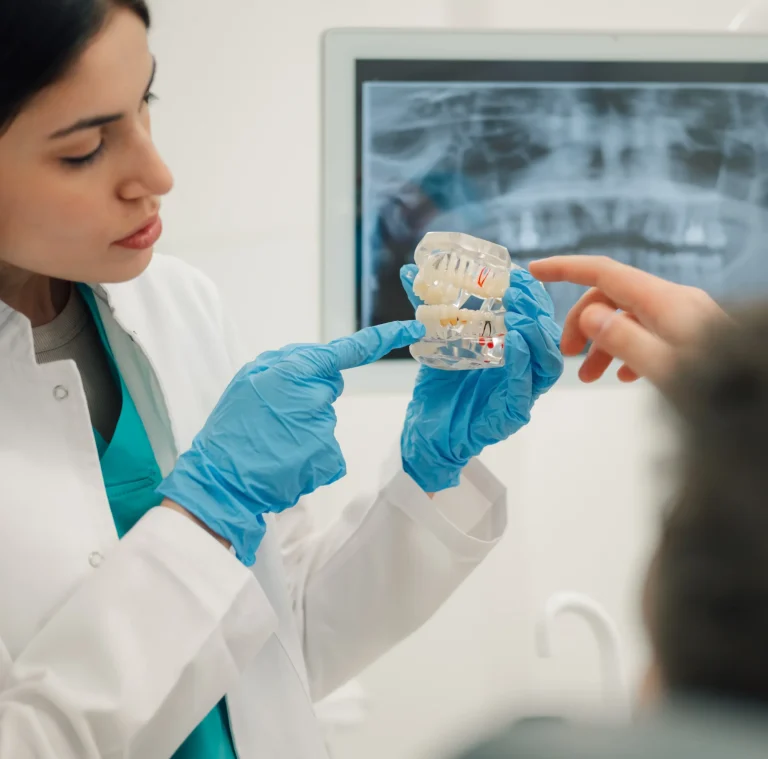
What to Know About Bone Grafting Before You Decide
Bone Grafting in Richardson TX is usually recommended for one reason: there is not enough healthy jawbone in a spot where you need it. That might be the site of a tooth that came out years ago, a socket left after a recent extraction, or an area where gum disease has worn the ridge down. A graft adds material that your body uses as a scaffold to grow its own new bone in that space.
Most patients hear about bone grafting for the first time when they ask about a dental implant. The implant needs a stable bed of bone to anchor into. If the bone is too thin, too short, or has resorbed after a missing tooth, a graft is what makes the implant possible later on.
We will walk you through whether you actually need a graft, what kind, and what it changes about your treatment timeline. If you do not need one, we will tell you that too. When something is outside our scope, we say so and refer to a specialist we trust.
How a Dental Bone Graft Rebuilds the Jaw
A bone graft is a small procedure done under local anesthesia, with sedation available if you would rather not be fully aware of it. Dr. Korenman opens the gum over the area that needs rebuilding, cleans the site, and places grafting material into the defect. The material acts as a placeholder. Over the following months, your own bone cells migrate in and replace it with living bone.
The grafting material itself comes in a few forms. It can be processed human bone, bovine-derived mineral, or a synthetic. Each has its place, and the right choice depends on the size of the defect and what is being rebuilt. We will tell you which one we are recommending and why, before any work begins.
Healing happens in stages. The gum closes within a couple of weeks. The bone underneath continues maturing for three to six months, sometimes longer for larger sites. Dr. Korenman calls every patient the evening after a procedure to check in, and he gives out a direct number in case anything feels off in the days that follow.
When Bone Grafting Is Recommended (and When It Is Not)
The most common reason is to prepare a site for a dental implant. If a tooth has been missing for a year or more, the bone in that area has likely shrunk because nothing is stimulating it. A graft restores enough volume to place an implant safely. This is often done as a socket preservation graft at the same visit as a tooth extraction, which keeps the ridge from collapsing in the first place.
Bone grafts also come up in periodontal care. Advanced gum disease can eat away at the bone around natural teeth, and a small graft in those pockets can help stabilize a tooth that would otherwise be at risk. In other cases, a sinus lift graft is needed when upper back teeth are missing and the sinus floor sits where an implant needs to go.
Not everyone needs one. Some extraction sites heal with plenty of bone on their own, and some implant sites have all the bone they need from the start. We use 3D NewTom VG3 cone-beam CT imaging in-house, so the jaw can be mapped in three dimensions before we recommend a graft. If the scan shows enough healthy bone, we will say so and skip the step.
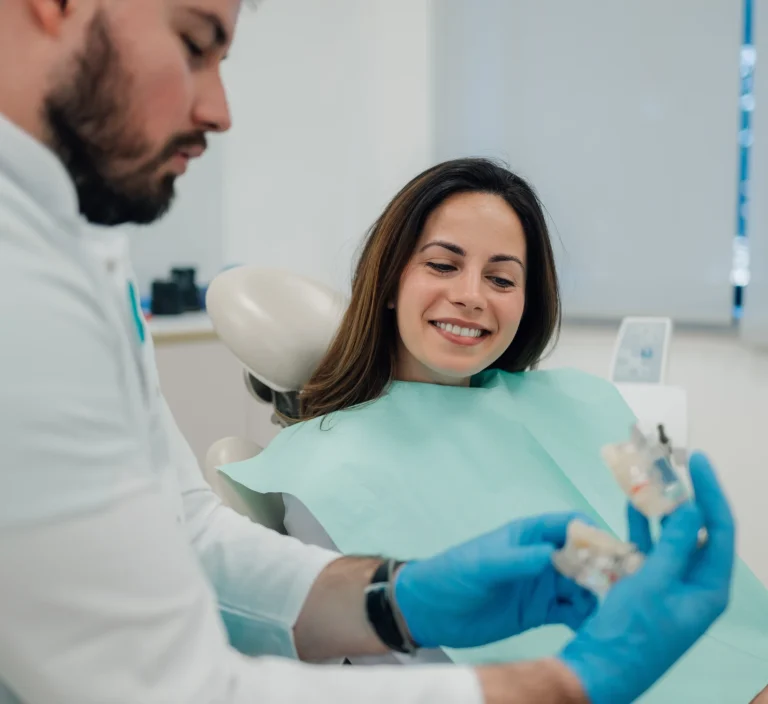
What Your Bone Grafting Visit at Loveable Smiles Includes
Your first visit is a conversation and a careful look. Dr. Korenman will ask what you are worried about, what brought you in, and what you have been told before. If we need imaging, the cone-beam scan is taken here in the office, and you will see it on the screen with us as we go through it.
Before any treatment is scheduled, you get a written plan with clear fees. That plan spells out what the graft will cost, what the implant or restoration that follows will cost, and what your insurance is likely to cover. If something is optional, we will say it is optional and let you decide.
On the day of the procedure, we numb the area thoroughly and offer sedation if that helps you relax. Most grafts take under an hour. You will leave with written aftercare, an ice pack, and a follow-up scheduled. That evening, expect a call from Dr. Korenman to check on how you are doing. If you have a question at 9 p.m., you have his direct number.
Insurance and Payment for Bone Grafting
Bone grafting is often partially covered by dental insurance, especially when it is tied to an extraction or a medically necessary repair. Coverage for grafts done in preparation for an implant varies more, since some plans treat implant-related work differently. We work with most PPO plans and will run the benefits for you before you commit to anything.
Our front office will give you the estimated insurance portion and your out-of-pocket portion in writing. If financing makes the timing easier, we can walk through the options at the consultation. The goal is no surprises on the day of treatment, and no pressure to move faster than you are ready to.
If you want to see the bigger picture first, our page on Dental Insurance in Richardson TX covers how we handle benefits across all of our services, including Oral Surgery in Richardson TX and Dental Implants in Richardson TX.
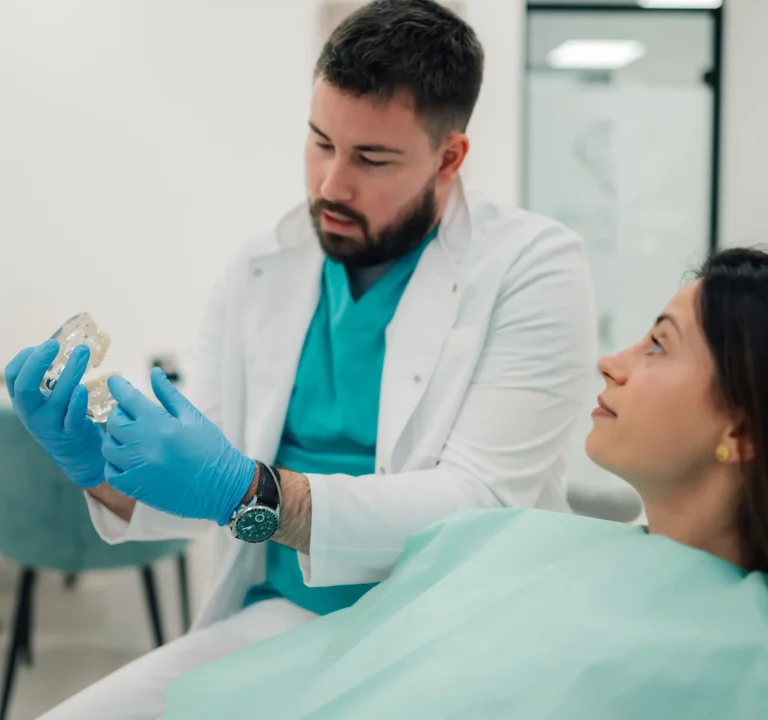
Why Bone Grafting Is Worth Considering
A graft is rarely the end goal. It is the step that makes the next thing possible: a stable implant, a saved tooth, a ridge that holds its shape under a denture. Skipping it when it is truly needed usually means a more complicated repair down the line, or an implant that cannot be placed at all.
Done well, the bone you grow back behaves like the bone you were born with. It supports chewing forces, holds an implant for decades with proper care, and keeps the shape of your face from changing where teeth used to be. Outcomes vary based on bone health, hygiene, and how you heal, and we will be honest with you about what to expect in your specific case.
If you are weighing whether to move forward, the consultation is the right next step. You will leave knowing what your jaw actually looks like in three dimensions, what your options are, and what each one costs. From there, you decide. For related care, you can also read about Tooth Extractions in Richardson TX, PRF Treatment in Richardson TX, or our work as your dentist in richardson tx.
Talk Through Your Bone Grafting Options First
Come in for a careful look, a 3D scan if it helps, and a written plan with clear fees. Dr. Korenman will explain what the graft does, what it costs, and what comes next before any work begins.